


Introduction
The feed sector plays a critical role in ensuring the safety, sustainability, and efficiency of food-producing animal systems. This standard provides a consistent framework for calculating and communicating the environmental impact of feed for food-producing animals. Its purpose is to ensure transparency, comparability, and reliability in sustainability reporting across the supply chain.
The methodology is based on Life Cycle Assessment (LCA), a systematic approach for evaluating environmental impacts across all stages of a product’s life from raw material sourcing to production, transport, and end use. In the context of feed, LCA ensures that sustainability assessments are comprehensive and scientifically robust.
To harmonise calculations, this standard follows the Product Environmental Footprint (PEF) approach, developed by the European Commission. Because feed production has unique characteristics, sector-specific guidance is provided through the Product Environmental Footprint Category Rules (PEFCR) Feed for Food-Producing Animals. These rules translate general PEF principles into practical requirements for modelling ingredients, processes, and impacts by defining:
- System boundaries: Definition of the required life cycle stages and processes, including raw material sourcing, energy use, and transport.
- Impact categories: Specification of relevant environmental indicators, such as climate change, land use, water consumption, and resource depletion.
- Modelling requirements: Rules for accurately representing feed ingredients, co-products, and processing steps.
- Data quality criteria: Requirements to ensure transparency, traceability, and reliability of both primary (direct measurements) and secondary data sources (industry databases).
Tools recognised under this standard apply the defined methodology and make use of internationally recognised databases, such as the Global Feed LCA Institute (GFLI) database. These databases provide harmonised life cycle inventory data and emission factors for feed ingredients, supporting robust and comparable assessments.
The scope of this standard covers feed production processes and associated upstream supply chain activities, including raw material sourcing, energy used in production, and transport. The downstream boundary of the scope is the entrance gate of the livestock farm. Clear system boundaries ensure that assessments remain focused and aligned with the intended purpose of the standard.
Finally, the application of LCA under this standard is an iterative process. Regular updates are required to reflect changes in feed formulations, ingredient sourcing, production technologies, and regulatory requirements. This dynamic approach ensures that sustainability reporting remains accurate, relevant, and supports continuous improvement in environmental performance.
1. Scope of this document
See § 3.5 “Feed environmental footprint” in F0.3 Scopes for certification.
This document applies to GMP+ FSA certified companies and companies certified for an equivalent feed safety standard for the following scopes (see TS1.2 Purchase):
- Production of compound feed
- Production of premixtures
- Production of feed materials
- Production of feed additives
- Trade in feed.
The certified company carrying out one or more of the activities under this standard as indicated below, must meet the following requirements:
| Activities: | Applicable paragraphs: |
| Production of compound feed | Entire document |
| Production of premixtures | |
| Production of feed materials | § 2, § 3, § 4.1, 4.2.2, 4.3, 4.4, § 5.3.4, and § 6 |
| Production of feed additives | |
| Trade in feed materials | |
| Trade in feed additives | |
| Trade in compound feed | § 2, § 3, 4.3, 4.4 and § 6 |
| Trade in premixtures | |
| Trade to livestock farms |
2. Normative References
This MI-document must always be used in combination with the R5.0 Feed Responsibility Management Systems Requirements which ensures the implementation of a Feed Responsibility Management System (FRMS).
3. Terms and Definitions
The terms below are specific to MI5.7. For all other terms and definitions, refer to F0.2 Definition list.
| Term | Description |
| Carbon footprint (CFP) | The total amount of greenhouse gas emissions, expressed as CO₂-equivalents, generated across the entire life cycle of a feed product, expressing the environmental impact category “Climate change.” |
| Country of origin | The country in which the feed ingredient is primarily cultivated. Where cultivation is not applicable because of the nature of the product, it refers to the country of production. |
| Company specific data (Primary data) | It refers to directly measured or collected data representative of activities at a specific facility or set of facilities. |
| Feed Environmental Footprint (FEF) | The total environmental impact associated with all life cycle stages of feed, including the production of feed ingredients, their transport to the feed mill, feed manufacturing, and the delivery of feed to the livestock farm. It encompasses all 16 environmental impact categories, which are:
|
| GFLI | Global Feed LCA Institute |
| Global value | A value applicable worldwide for the environmental impact data listed in PEF-aligned database. |
| Inbound transport | All transportation activities required to move feed ingredients, additives, or intermediate products from their place of origin (e.g., country of cultivation, extraction, or production) to the company’s feed production site. This includes all upstream shipments from suppliers, traders, or storage locations to the feed mill. |
| Life Cycle | All successive and/or interconnected stages, including research and development, production, trade, transport, use, and maintenance throughout the entire lifecycle of feed, from raw material acquisition to disposal or use. |
| Life Cycle Assessment (LCA) | A process that evaluates the environmental impact of a product throughout its life cycle to improve resource efficiency and reduce liability. It is used to study the environmental burden of a product or its intended function. LCA is often called a "cradle-to-grave" analysis. The key elements include: (1) Identifying and quantifying environmental loads (e.g., consumed energy and raw materials, emissions, waste produced) (2) Evaluating the potential environmental impact (3) Assessing options to reduce environmental burdens. |
| LCA calculation | It refers to the determination of the carbon footprint, along with any other environmental impact categories, as defined in the scope by the certified company. |
| Mass balance | The chain of custody model under which the FEF remains assigned to batches of material on a bookkeeping basis while the physical mixing of material with different FEFs and the mixing with feed without primary data is allowed. |
| Outbound transport | All transportation activities from the company (last link in the supply chain) to the livestock or fish farm. |
| PEF-compliant database | The database which provides environmental impact data compliant with PEFCRs. |
| Product Environmental Footprint Category Rules (PEFCRs) | Life-cycle-based, product-category-specific rules that supplement general methodological guidelines for PEF studies by providing additional specifications at the product category level. If PEFCRs exist, they must be used to calculate the environmental footprint of a product in that category |
| Proxy | A substitute ingredient from a list managed by GMP+ International, used when no data is available for an actual ingredient in PEF-aligned databases |
| Recognised calculation tools | Software packages (third party or in-house tools used by the company) benchmarked and approved to be listed in Appendix 1 Recognised calculation tools of this standard to calculate the feed environmental footprint. |
| Renewable energy sources | It includes wind energy, solar energy, geothermal energy, ambient energy, ocean energy, hydropower energy, biomass, biogas. |
| Selected Feed Environmental Footprint (SFEF) | The combination of CFP with a subset of other environmental impact categories. |
4. System requirements
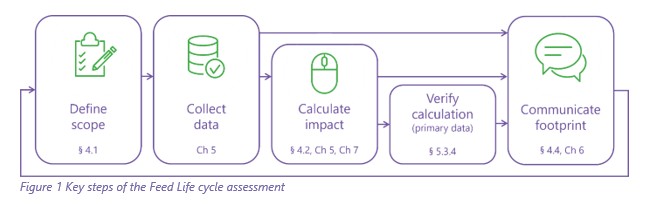
Figure 1 shows the key steps of the life cycle assessment described in the chapters below.
4.1. Defining the scope
The certified company must define the scope of certification as described in § 4.1.3 of R5.0 Feed Responsibility Management System by specifying:
- which feed products are subject to certification,
- the environmental impact categories included in the LCA calculation.
The inclusion of the environmental impact category ‘Climate change’ (or Carbon Footprint, CFP) in the scope of certification is mandatory.
The defined scope must be documented and kept up to date.
Helpful tip
EU legislation, national legislation or national sector agreements may prescribe specific environmental impact categories that must be reported.
4.2. Calculation tools
4.2.1. Production of Compound Feed and Premixtures
The certified company producing compound feed and/or premixtures must demonstrate that it uses one of the Recognized calculation tools listed in Appendix 1 Recognised calculation tools. This tool must be used for all LCA calculations for all feed products included in the scope of this standard.
If a tool is not included in Appendix 1 and the certified company intends to use it, the company must submit the tool for the benchmarking process outlined in § 7 to verify compliance with all necessary requirements.
4.2.2. Trade of feed, Producers of feed materials and feed additives
The certified company with the scope Trade of feed, Production of feed materials and/or Production of feed additives may use any tool provided it uses the PEFCR methodology, GFLI Branded Data Methodology and integrates PEF-compliant databases.
4.3. Documented information
In addition to the requirements specified in § 4.1.6 of R5.0 Feed Responsibility Management System, the certified company must keep documented information for at least five years, unless a longer storage period is required by applicable feed legislation or other regulations.
Helpful tip
Documented information can include procedures, instructions and reports.
4.4. Traceability system
The certified company must document and maintain a list of customers who require the CFP, SFEF or FEF of the purchased feed. In addition, the certified company must have at least the following information available for each customer included in the scope of this standard:
- Customer name and address details
- Delivery date
- Delivered feed name
- Target animal species (only applicable for compound feed and premix producers)
- Batch number
- Delivered weight (tonne)
- CFP, SFEF or FEF of the feed per tonne
Helpful tip
The target animal species may include ruminants, pigs, poultry or fish.
Helpful tip
For the definition of “feed” please refer to F0.2 Definition list.
5. Data Requirements for LCA Calculations
5.1. Data inventory procedure
The certified company must establish and maintain a documented procedure describing the data inventory process. This procedure must contain as a minimum:
- the source of the data,
- the time period it is applicable to,
- any conversion of the data,
- the final value that is used as input into the (recognised) tool,
- how the results are communicated to the customers and third parties.
Helpful tip
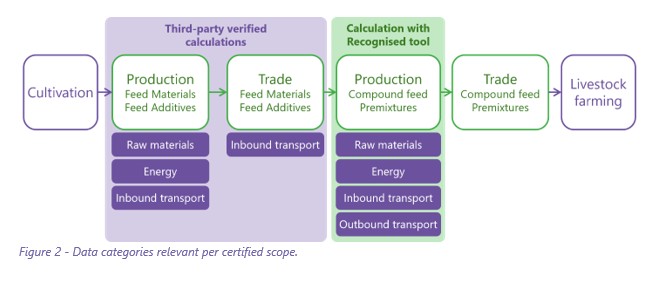
Figure 2 shows the type of data associated with various activities within the supply chain.
5.2. Composition of the feed
For each feed formulation, the certified company must document the weight in metric tonne (1000 kg) of each ingredient.
Helpful tip
Utilizing formulation management tools can assist in accurately determining the composition of the feed.
5.3. Ingredient selection, energy and transport
5.3.1. Approach for ingredients with multiple origins
The certified company must use the recognised tools to calculate CFP, SFEF or FEF per formulation, based on the individual environmental impact of each ingredient.
Helpful tip
The same ingredient may have a different environmental impact depending on factors such as production process and origin (local, neighbouring country, different continent, etc.).
If, in a given feed formulation, the country of origin of an ingredient varies during the year, the certified company must use a weighted annual average based on the previous calendar year. When the country of origin is not known for a particular delivery, the global value must be used.
For an ingredient with multiple origins, one of the three following approaches must be used:
- Origin per Compound Feed or Premixture
The weighted annual average of the previous year must be calculated on formulation level.
Helpful tip
Example: For a formulation for compound feed 150 tonnes of rapeseed flakes were used last year. Over the whole year, 95 tonnes of the rapeseed flakes were Canadian origin, and 55 tonnes were French origin.
In the current year, for this formulation, Canadian origin is [95 x 'Canada'] / [95 x ‘Canada’+ 55 x 'France'] = 63%, and French origin is [55 x 'France'] / [95 x ‘Canada’+ 55 x 'France'] = 37%.- Origins per Production Site
The weighted annual average of the previous year must be calculated on production site level. These percentages should be used for all formulations containing this ingredient, even if a given formulation contains only one origin.
Helpful tip
Example: In the previous year, the production site used 100 tonnes of rapeseed flakes; 30 tonnes from Canada and 70 tonnes from France.
In the current year, the rapeseed flakes used in all formulations produced at the production site will be from ["Canada" x 30] / ["Canada" x 30 + "France" x 70] = 30% Canadian, and ["France" x 70] / ["Canada" x 30 + "France" x 70] = 70% French origin.
- Origins for Centralized Purchasing
The weighted annual average of the previous year must be calculated on central office level. These percentages apply to the ingredient in all formulations, and all production sites purchased for by the central office. This is regardless of actual origin.
Helpful tip
Example: In the previous year, the central office purchased rapeseed flakes in the following ratio: 45% from Canada and 55% from unknown origin.
In the current year, a given formulation is only using rapeseed flakes from Canadian origin. The origin of the rapeseed flakes used in that formulation, and all other formulations using rapeseed flakes, at all production sites is 45% Canadian, and 55% global origin.
The certified company must only use one approach for all their compound feeds and premixtures. The certified company must document the implemented approach.
5.3.2. Ingredient selection from PEF-compliant database and inbound transport
The certified company must select each ingredient with the correct country of origin from a PEF-compliant database.
The certified company must use the default transport distances specified in Annex 6: Default activity data for inbound transport (Distances and Mode) of the latest version of the PEFCR Feed. The certified company may use instead the actual inbound transport distance, if the inbound transport route is known.
If a feed ingredient is available in the PEF-compliant database, but does not correspond to the correct country of origin, the certified company must apply the following:
- select a higher-level origin category for the ingredient:
- Region, for example Europe (RER), Asia, Latin America, if a regional origin is available
- Global (GLO, worldwide) if no specific regional origin is available.
- use the default transport distances specified in Annex 6 of the latest version of the PEFCR Feed.
Helpful tip
For example, the certified company processes ‘beet vinasse’ supplied from NL in a factory in BE which is delivered by truck. In the PEF-compliant database only ‘beet vinasse’ from BE is provided. In that case, select ‘beet vinasse’ from Europe (Vinasse, wet, sugar beet, at processing/RER) as a proxy for the ingredient. To enter the inbound transport distance of this ingredient, use the distance NL-BE from the PEFCR Feed (i.e. 82 km if delivered by truck).
5.3.3. Proxy selection
If a feed ingredient is not available in the PEF-compliant database, the certified company must select a proxy from Appendix 2 Proxy list. The certified company must document the relation between the original ingredient and the selected proxy.
Helpful tip
For example, if 100% Brazilian soybeans are crushed in the Netherlands (NL), select: “Soybean meal, from crushing (solvent), at plant/BR (Brazil) Economic S” (GFLI).
Or; If 100% Brazilian soybeans are heat-treated in Belgium (BE), select: “Soybean, heat treated, at processing/BR(Brazil) Economic”.
If no suitable proxy is available in Appendix 2, the following process applies:
- the certified company must notify GMP+ International
- stating the original ingredient and at least its country of origin.
- until GMP+ International has communicated an official proxy, the certified company must provisionally allocate the most representative proxy available in the PEF-compliant database.
- the certified company must document the provisional proxy selection.
Helpful tip
For provisional proxy selection, the following options can be considered: same product from a neighbouring country, precursor or processed form from the same country, precursor or processed form from a neighbouring country or higher-level origin (EU, GLO).
Following the publication of the updated Appendix 2, the certified company must include the approved proxy into the calculation(s) immediately. The proxy becomes mandatory for all subsequent LCA calculations involving the relevant ingredient.
To select the appropriate proxy for amino acids and premixtures from the PEF-compliant database, the certified company must consider the following:
- Amino acids
- The proxy selected for an amino acid must have the same country of origin as the actual amino acid. The origin takes precedence over the physical form (dry or liquid).
- The general product category “Total minerals, additives, vitamins, at plant/RER Economic” from the GFLI database must not be used as a proxy for an amino acid.
- When using a liquid amino acid as a proxy for a solid amino acid, the concentration of the amino acid in the liquid formulation must be corrected for.
- Premixtures
- The certified company must request their premixture supplier to provide the CFP, SFEF, or FEF calculated according to this standard.
- If primary data is unavailable, the percentage of amino acids in the premixture must be obtained.
The certified company must add the amino acid ‘Lysine’ and the group ‘Total minerals, additives and vitamins’ as two separate ingredients.
The weight of the premixture added to the formulation is divided between the two ingredients using the percentage of amino acids.
Helpful tip
For example, if 1 kg premixture (20% amino acids) is added per tonne of compound feed, add [20% * 1 kg] = 0,2 kg of Lysine, and [80% * 1 kg] = 0,8 kg of Total minerals, additives and vitamins.
5.3.4. Use of company-specific or primary data for ingredients
If the certified company wants to communicate company-specific environmental impact of their products, the calculations must be performed according to PEFCR. The calculations and their outcome must be:
- Verified by an independent third party accredited for LCA review according to:
- ISO 14044 for a multi-impact LCA study, or
- ISO 14067 for a Product Carbon Footprint study.
- In alignment with the “PEFCR feed for food-producing animals” and the GFLI Branded Data methodology, and
- Confirmed with a statement linked to the ingredient. The statement must contain at least the information provided in the template Appendix I Verification Statement.
Helpful tip
Independent third parties available to conduct the verification mentioned in § 5.3.4. point 1 can be found in the following link; this list serves as a reference.
5.3.5. Mixing feed materials covered under primary data statements
The certified company can mix batches of the same feed ingredients covered under different primary data statements (see Chapter 6. Communication), or a batch of conventional feed ingredient with a batch covered under a primary data statement. The company must ensure that the outgoing quantity of any batch covered under a primary data statement does not exceed the received quantity of that batch, by keeping a mass balance over a fixed inventory period of maximum 3 months. This mass balance must be location specific and can only contain feed ingredients that were physically received at the business location of the certified company.
5.3.6. Energy used in feed production
The certified company must include the impact of production using primary energy consumption data. This energy used must be distinguished in different energy sources including, but not limited to, electricity, natural gas, diesel, propane. Energy consumption related to office operations can be excluded from this calculation.
Helpful tip
Office operations may include lighting, heating, cooling, office equipment, and IT systems.
The certified company must include any renewable energy generated and used immediately for feed production (without passing through the grid) under the corresponding energy source in the calculation tool.
Therefore, the total energy used for feed production =
Energy used from grid + renewable energy generated – renewable energy exported to grid – energy used for office operations
The certified company must ensure the amount of feed produced and the energy consumption correspond to the same period. The minimum required level of accuracy is the energy consumption data from the feed company over one year.
The certified company must keep documented information regarding the amount of energy used, energy generated and feed produced per production location.
5.3.7. Outbound transport calculation
For the activities Production of compound feed or Production of premixtures covered under the scope of this standard, the certified company must include the outbound transport from the feed mill to the livestock farm. The company must use following to calculate the impact of outbound transport:
- The actual outbound transport data, or
- The default transport distances specified in Annex 6: Default activity data for inbound transport (Distances and Mode) of the latest version of the PEFCR Feed for Food-Producing Animals.
This may be done with different levels of accuracy, with the following hierarchy (from accurate to least accurate):
- Fuel consumption to the livestock farm per mode of transport;
- Distance to the livestock farm per mode of transport;
- Average fuel consumption per mode of transport per tonne feed delivered (feed formulation specific);
- Average distance to all livestock farms per mode of transport (target animal specific).
6. Communication
The certified company must notify its supplier about which feed products are covered by this standard and specify the environmental impact categories they require information on.
The certified company must communicate the CFP, SFEF, or FEF to the customer requiring this information, for feed in the scope of this standard, at least once per calendar year. The documented information and frequency of communication is to be agreed by the relevant parties.
The CFP, SFEF, or FEF of feed may only be communicated by companies certified according to this standard or one of the accepted certifications specified in Appendix 3 Accepted certifications.
Helpful tip
Depending on the legislation and/or requirements from customers, the CFP, SEF, or FEF can be communicated. Customers can be informed through delivery slips, delivery note, invoices, shipping documents, and feed accompanying documents.
For primary data calculated and verified according to the requirements in § 5.3.4, the certified company must communicate at least the information provided in Appendix II Primary Data Statement. In addition to the requirements set out in § 4.5 of R5.0 Feed Responsibility Management System, the certified company must share the statement with the customer either per delivery or per contract. Primary data statements have a validity of one year after date of issuance.
The certified company with the scope Trade in feed receiving and forwarding primary data must add the inbound distance per transport mode (in km) to the Appendix II Primary Data Statement. If the received statement already contains distances from the previous link(s) in the supply chain, the distances must be accumulated.
Helpful tip
For example, a certified company with the scope Trade in feed buys a batch of crude soybean oil from Argentina and arranges shipment to Rotterdam, where it is stored in the trader’s tank.
From the moment the trader takes charge of the oil in Argentina until it is delivered into the storage tanks in Rotterdam, this journey is considered inbound transport. Once the oil is stored and customers start collecting it, the inbound transport phase of the trader ends.
If instead, the trader arranges transport from Argentina directly to the customer, with no storage in between, the full journey from Argentina up to the customer is considered inbound transport.
7. Approval criteria and Benchmarking process for Calculation tools
This chapter outlines the criteria and approval process for calculation tools used to calculate the feed environmental footprint under this standard.
To ensure consistency in the calculation of the feed environmental footprint, only recognised calculation tools that have passed the benchmarking process must be used.
The certified company must ensure that any embedded reporting system used (e.g., Global Feed LCA Institute (GFLI)-integrated formulation software) complies with all requirements specified in § 7.1, successfully passes the benchmarking process, and is listed in Appendix 1 Recognised calculation tools.
7.1. Benchmarking Criteria and Approved Independent Third Parties
Table 1: Benchmarking criteria for tools
| Categories | Requirements |
| Impact method | Environmental Footprint Reference package EF3.1, Global Warming Potential (GWP) values: IPCC 2021 AR6, GWP100 |
| Impact coverage | All 16 Environmental Footprint impact categories. |
| Primary data source | GFLI database must be the primary database. |
| Supplementary data sources | Based PEFCR Feed Decision Tree in section 9.6 of PEFCR Feed document other databases may be used only for the purpose of providing additional calculation details.
|
| Version control of Databases | Only the most recent available versions of all databases must be applied. |
| User Interface | Users of the tool cannot adjust calculation method. Users of the tool cannot select between same ingredient across databases |
| Origin | Allow the user to compile their own mixes (annual average) of origins, which can be entered in the calculations under 1 ingredient name. |
| Proxy selection | Based on the requirements described in §5.3.3 of MI5.7 Feed Life cycle assessment (LCA), following two options are available:
|
| Energy | For the parameterized data of the energy processes, the Ecoinvent or Agri-footprint database must be used. |
| Transport | For the parameterized data of the transport processes, the Ecoinvent or Agri-footprint database must be used. |
| Implementation of changes | Within 1 year |
Table 2: List of the approved independent third parties for benchmarking of tools
7.2. Application and Benchmarking process
The certified company intending to introduce a new calculation tool must:
- Submit a formal request to GMP+ International through fra@gmpplus.org for benchmarking of a new calculation tool,
- Submit a formal request for benchmarking to an approved independent third-party listed in Table 2 of § 7.1 including all information required in Table 1 of § 7.1.
Upon successful completion of the benchmarking process, the recognition of the tools listed in Appendix 1 Recognised Calculation Tools will remain valid under the following conditions:
- the tools implement updates of the PEFCR Feed within 1 year of its publication (latest version is valid until 31 December 2025), and
- the tools implement updates of the GFLI database within 1 year of its publication (latest GFLI v3.0 version was published on 20 January 2026).
- the tools notify its users and GMP+ International of any methodological changes within one month of their implementation.
Appendix I Verification Statement
This appendix provides a template for the verification statement referred to in § 5.3.4 of this standard. The structure of the statement may differ, but it must contain as a minimum the information stated below.
Verification Statement
1. Verification Body Details
Name: [Name of Verification Body]
Address: [Full Address of Verification Body]
Accreditation: [e.g. “Qualified for ISO 14044 critical reviews and ISO 14067 CFP reviews; competencies per ISO 14071 Annex B, Accreditation No. [Number]”]
Contact details: [Name, email address]
2. Data Provider Details
Name: [Company/Organisation Name]
Address: [Full Address of Data Provider]
3. Dataset Identification
Name: [Dataset name]
Version: [Version number]
Scope: [e.g., “Cradle-to-gate study for [Ingredient/Product Name] in [Region/Country]”]
Functional unit: [e.g. “1 metric tonne product”]
4. Standards and references
This statement confirms that the dataset for [Ingredient/Product Name], provided by [Company/Organisation Name], has undergone an independent critical review in accordance with
- [ “ISO 14044 (Environmental management — Life cycle assessment — Requirements and guidelines) for multi-impact LCA,
- ISO 14067 (Greenhouse gases — Carbon footprint of products — Requirements and guidelines for quantification) for Climate change”].
The dataset has been reviewed for alignment with GFLI Banded Data Methodology and the Product Environmental Footprint Category Rules (PEFCR) – Feed for food producing animals.
5. Description of Review Process
Review type: [Single reviewer / Panel and names]
Process: [Rounds, documents reviewed, key topics addressed]
Materials reviewed: [Methodology report, tool or model files, data dictionary, annexes]
6. Statement of Conformance
Based on the verification performed, we hereby confirm that the dataset associated with [Ingredient/Product Name] meets the requirements of the relevant standards and methodologies specified below.
Climate Change (CFP-only) Dataset
The dataset conforms to ISO 14067 for the climate change indicator in accordance with PEFCR Feed for food-producing animals and the GFLI methodology.
Other impact categories are not included, and the dataset must not be used for multi-impact comparisons.
Full LCA Dataset
The dataset conforms to ISO 14044 for the reported impact categories and in accordance with PEFCR Feed for food-producing animals and the GFLI methodology.
7. Date and Place of Issue
Date of issue: [DD/MM/YYYY]
Place: [City, Country]
8. Validity of the datasets
The datasets referenced in this statement are valid for a period of two years from the date of issuance.
9. Signature(s)
Name: [Reviewer Name]
Position: [Reviewer Position]
Signature: ______________________
Date: [DD/MM/YYYY]
10. Annexes (if applicable)
[List any supporting documents, evidence, or additional information attached to the statement, e.g., “Annex 1: Review Report”, “Annex 2: Data Quality Assessment”]
Appendix II Primary Data Statement
This template serves as an example for communicating the primary data referred to in § 6 of this standard within a supply chain certified for MI5.7 Feed Life Cycle Assessment (LCA). The structure of the template may differ, but it must contain at least the information provided in this appendix.
Primary Data Statement
| Supplier information | Recipient information |
| Name | Name |
| Address | Address |
| City | City |
| Country | Country |
| GMP+ certificate no. supplier |
|
| Contract no. |
|
| Issue date primary data statement |
|
Primary data source
| Product name |
|
| Country of origin |
|
| Amount in MT |
|
| Batch, contract/delivery reference |
|
| Verification statement reference |
|
| Verification statement date |
|
Environmental impact data per tonne of product
| Climate change - total |
| kg CO2eq |
| Climate change - fossil |
| kg CO2eq |
| Climate change - biogenic |
| kg CO2eq |
| Climate change - LULUC |
| kg CO2eq |
| Ozone depletion |
| kg CFC11 eq |
| Ionising radiation |
| kBq U-235 eq |
| Acidification |
| mol H+ eq |
| Eutrophication, freshwater |
| kg P eq |
| Eutrophication, marine |
| kg N eq |
| Eutrophication, terrestrial |
| mol N eq |
| Human toxicity, cancer |
| CTUh |
| Human toxicity, non-cancer |
| CTUh |
| Ecotoxicity, freshwater |
| CTUe |
| Photochemical ozone formation |
| kg NWVOC eq |
| Particulate matter |
| Disease incidence |
| Resource use, minerals and metals |
| kg Sbe |
| Resource use, fossil |
| MJ |
| Land use |
| Pt |
| Water use | | m3 world eq depriv. |
Inbound transport distances
| Truck | Train | Vessel |
|
|
|
|
If the transport mode used is not listed here, it may be added.
Risk Management tools
That was a lot of information to digest and one might ask, what is the next step? Luckily we can offer support for the GMP+ Community when doing this. We provide support by means of various tools and guidance but each company has a shared responsibility to feed safety, and therefore tailor-made solutions cannot be offered. However, we do help by explaining requirements and provide background information about the requirements.
We have developed various supporting materials for the GMP+ Community. These include various tools, ranging from Frequently Asked Questions (FAQ) lists to webinars and events.
Supporting materials related to this document (Guidelines and FAQ’s)
We have made documents available which give guidance to the GMP+ requirements as laid down in the module GMP+ FSA and GMP+ FRA. These documents give examples, answers to frequently asked questions or background information.
Where to find more about the GMP+ International Risk Management tools? Fact sheets More information: GMP+ Platform Product list More information: Product list Risk Assessments More information: GMP+ Platform GMP+ Monitoring database More information: GMP+ Monitoring database Support documents More information: Support documents |