
When independent research firm Ipsos asked our stakeholders what changes they would like to see GMP+ International make to our service – 85% said they wanted us to increase the scope of our work on sustainability.
But what would that look like in practice?
Market relevance
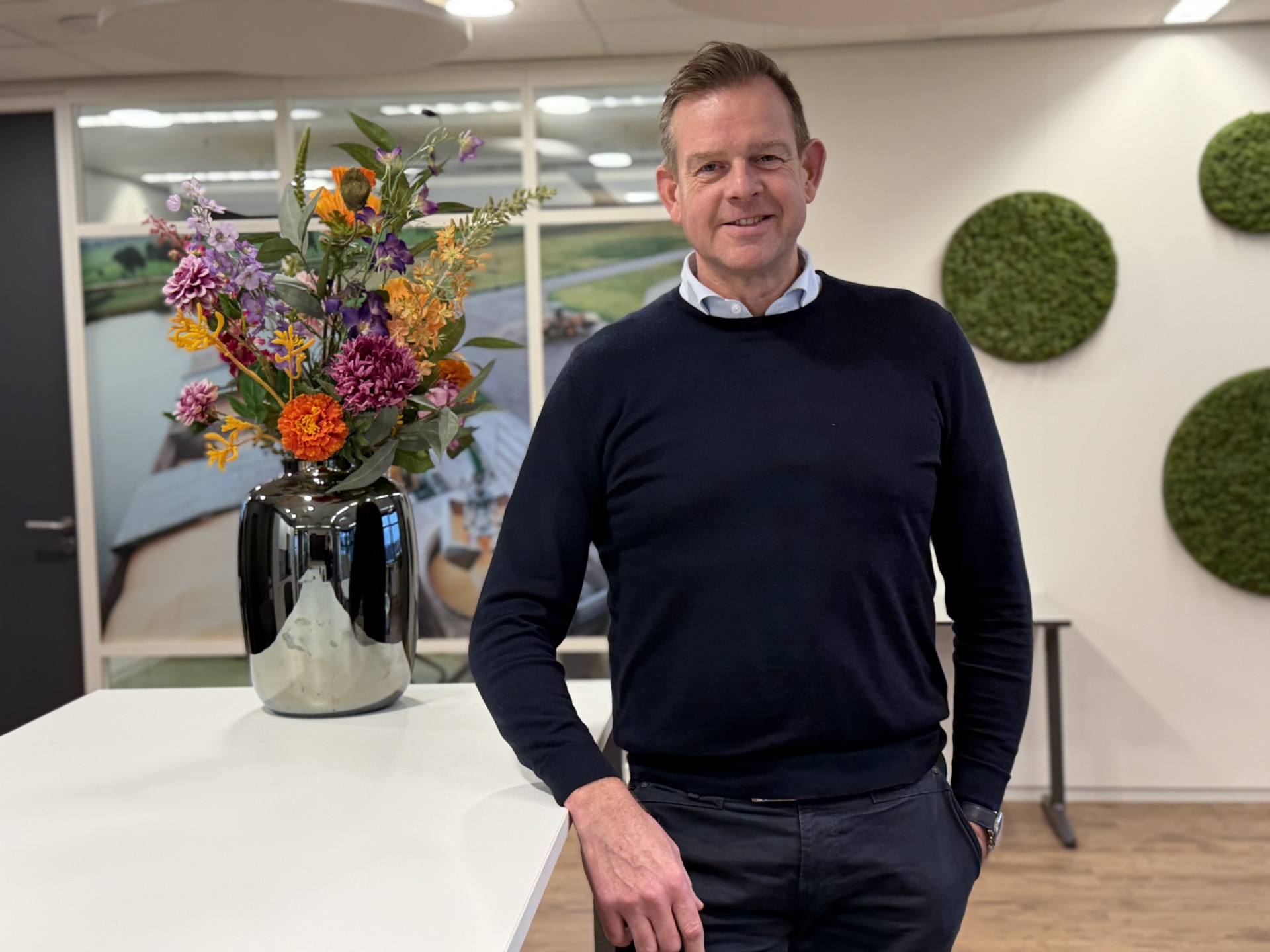
I joined GMP+ in December after 25 years working in food and beverages, and there is a lot of similarity between food and feed. Having worked in sustainability for big brands like Heineken, Douwe Egberts, and L’Or, I’ve seen firsthand that sustainability must be connected with your business, because good intentions are not enough – we have to make them an everyday business reality.
Similarly, GMP+ International’s efforts must not exist in isolation from the commercial world. If we make a standard or provide a service that is not relevant to the market, it won’t be used. If it isn't used, it will not lead to results. That’s why everything GMP+ develops is done in collaboration with the market, to ensure it is practical and workable.
The need however is crystal clear. Retailers are setting strict procurement requirements to meet their sustainability commitments, livestock farmers are being asked to demonstrate responsible sourcing, and the pressure on land, raw materials and energy is increasing every year. Sustainability has shifted from a voluntary ambition to a clear expectation, and the hallmark of a forward-thinking business.
Feed companies recognise this shift – otherwise they would not be calling for GMP+ to play a part. Feed companies are open to innovation, to more sustainable sources of protein, and to investing in renewable energy and improving circularity. But they are stuck in a complex situation; different methodologies, scattered data systems, and no single approach has yet emerged as the industry standard.
An independent partner
What the market is asking for is clarity and harmonisation. A shared language for data collecting, and a path that links good intentions with practical business action.
GMP+ has a unique position in these discussions. Our independence as a not-for-profit standard setter means we can convene interested parties, facilitate collaborations, and combine sustainability expertise with reality in the feed sector. This can help inform decisions that are driven by long term impact rather than short-term commercial or political distractions– to support the longevity of the whole industry.
And impact is the goal here. Because no matter what standards or services GMP+ or our partners provide, they must ultimately be about reducing harm, repairing the damage, and making a more conscious and responsible industry. There’s lots to address, but we can’t do everything. So we need to prioritise.
And so, I see three focus areas that we can use our independent position to help drive positive impact...
Decarbonise Supply Chains
Global animal protein production is the cause of 12-16% of global greenhouse gas emissions (and that’s before you include the associated damage caused from land use conversion and deforestation. Exactly how much of these emissions comes from the feed chain depends on the animal, the feed type, and regional variation – but the average is around 2/5ths (41%). Whatever we think of it, feed is a huge emitter of greenhouse gases.
Three strategic topics here that are central to working towards Net Zero feed supply chains by 2050; reducing Scope 1, 2, and 3 emissions, circular supply chains, and renewable energy usage. We want to explore frameworks and standards for each of these before 2030, and one we have already made some significant progress on.
Reducing our sector’s emissions will go faster if we adopt standardised methods that enable companies to calculate and reduce their footprint in credible ways. Last year, we ran a public consultation on a sector-wide standard for how to make these calculations for feed products, something called Life Cycle Assessments (LCA). A consistent LCA methodology will give so many feed companies the opportunity to quantify, and therefore confidently report, their sustainability efforts. For example, so many feed companies are reducing their footprint by using renewable energy (often with the help of government incentives), but without a fair comparison they are unable to demonstrate how far ahead they are – they may not even know.
We will be rolling out our MI5.7 Feed Life cycle assessment standard on 6 May this year.
Restoring Natural Ecosystems
Our industry is dependent on nature, and we need to do a better job of strengthening the resilience of agricultural systems, especially to mitigate climate risks.
Of course this means stopping deforestation and land-use change (LUC), but also supporting better practices like Regenerative Agriculture; a crop- and context-specific way of farming that restores soil health, biodiversity, and local eco-system function.
Water stewardship is also a major area of attention, with one-third of the world’s crop water being used for feed production. As climate conditions change and water scarcity becomes a growing risk, the feed sector will be expected to use water responsibly.
Restoring natural ecosystems is about long term viability. The land used to produce food and feed is under pressure, and we need to use it responsibly for both environmental health and food security. Supporting suppliers who avoid land conversion and support regenerative practices means feed companies reduce environmental risk and align with the expectations of downstream partners who are actively looking at their procurement practices.
Once again, end-to-end data is key here. A reliable, harmonised, and low-threshold system for facilitating data across the supply chain can support compliance and sustainability efforts for traceability, legality, and land-use change. We are actively exploring a Data Protocol, a modular framework that defines the essential data, assurance rules, and transfer mechanisms needed to enable credible, scalable sustainability claims across actors in the feed supply chain.
Thriving Knowledgeable Communities
Frameworks, standards, and harmonised systems will only ever be as good as the community that uses them. We want to raise the level of awareness and knowledge of feed safety and sustainability practices for the sector as a whole.
This is where our unique position shines, because while we are independent we do not act alone. We already engage on a daily basis with the world’s largest community for feed safety, and through the GMP+ Academy we can inspire our industry’s workforce to learn, understand, and apply practices that will support a more sustainable sector.
Whenever we engage with the community and other stakeholders, we always use what we’ve learned to improve our scheme and services. This is essential for market relevance, and we will actively review our standards for relevancy, accuracy, feasibility, and integrity to ensure we are continuously improving. We actively reach out to all stakeholders on various occasions, including the upcoming VICTAM International conference in Utrecht.
Becoming a more sustainable community is the right move. Feed companies operate in a competitive industry, and things will always be unpredictable, but as a sector we embrace innovation and advocate for what is right for a sustainable future for the feed industry. I’m excited about the level of enthusiasm there is in the feed value chain to make the sustainability transition, and I can’t wait to do so in partnership with you all.