Rewarding sustainable feed companies begins with comparable data
30 June 2026 | Martine Boon
The market is ready – that was the crystal-clear message from the multi-stakeholder dialogues we hosted earlier this month. Here are some of the insights and next steps for feed companies.
This month we brought together feed and food chain representatives from around the world to discuss coordinated action between our industries on sustainability.
The discussion revealed that the market is ready. We already knew that 85% of our stakeholders wanted us to do more on sustainability, and that financial institutions and retailers were asking for the sector for more. What became apparent was the appetite from everyone to get started now.
A sustainable bridge between feed and food
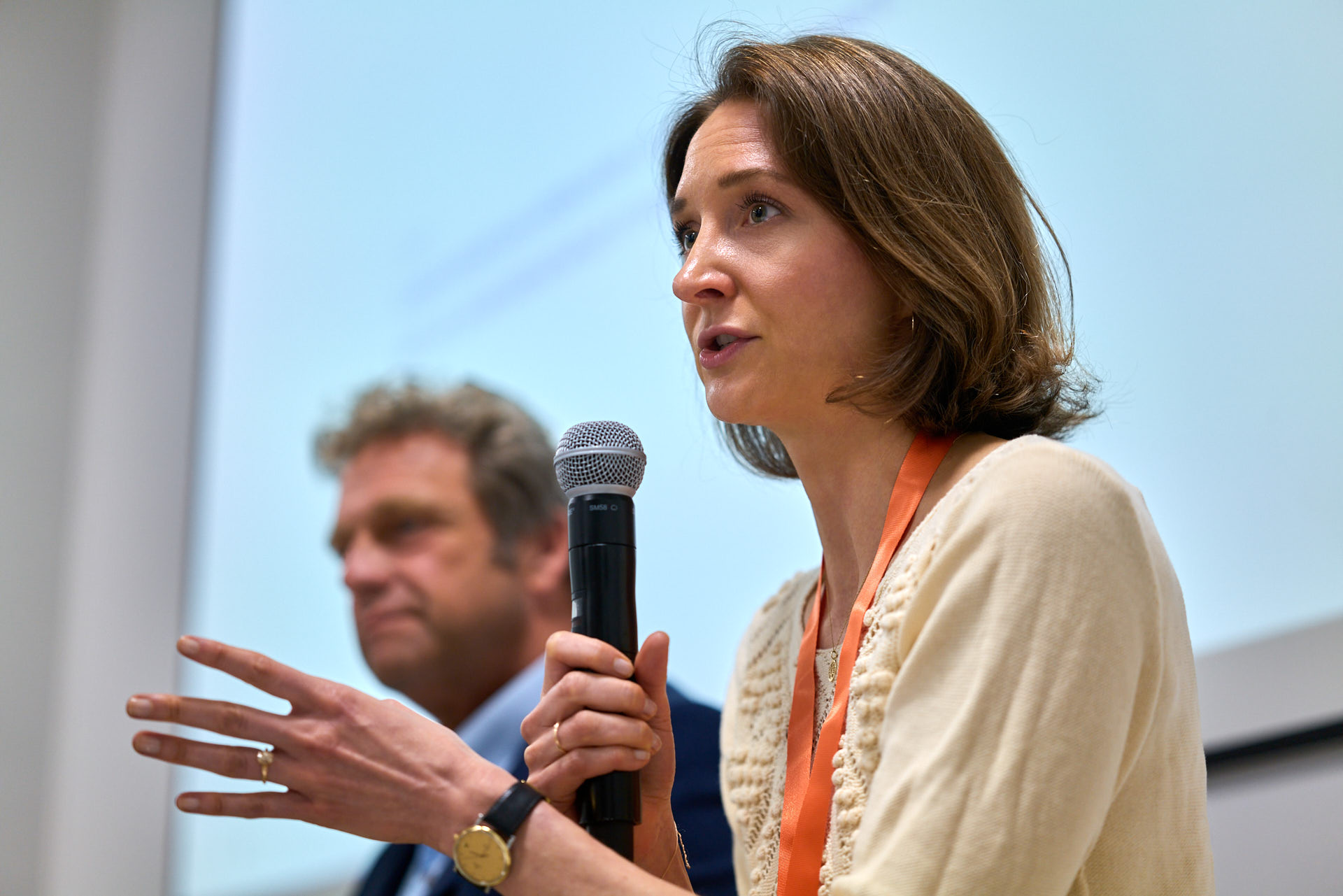
Hosted during the VICTAM International event in Utrecht, Netherlands, we convened almost 90 delegates for multi-stakeholder dialogues from across the feed and food sectors.
The goal was to build a sustainable bridge between feed and food. Attendees heard presentations from experts and key stakeholders that helped create a shared understanding of the sustainability challenges shaping the feed sector, and the rising expectations across the feed–food value chain.
Common phases
Lucas Simons presented findings on the common phases sectors go through in these kinds of transitions.
This included the current phase we find ourselves in, where we see many companies adopting different practices and initiatives in isolation from one another.
While the intentions are good, the lack of coordination increases the burden on farmers at the beginning of these supply chains, makes measuring and comparing progress complicated, and holds retailers back from being transparent with consumers about the impact of their food.
“Right now, we’re all playing our own instruments. The challenge is to turn the cacophony into music. It’s not that we can’t solve this, we’ve already done this with feed safety... it’s just that we have to organise.”
Lucas Simons, founder of sustainability consultancy NewForesight
Experts and the sector in agreement
A growing consensus was on display to pre-competitively coordinate on critical tools, like methods for measuring the environmental impact of products and what data should be collected and shared throughout the supply chain. A panel of experts shared their views that, despite the complexity of the issue, aligning on shared metrics was an important and achievable step to take.
Veerle van Linden, Senior Researcher, ILVO
“It’s good to hear that there is 100% agreement that harmonisation is needed. ...I truly hope that the whole food system is going to pay correct prices for food, so at least the value is distributed in the chain fairly.”
Anton van den Brink, Deputy Secretary General, FEFAC
“My biggest takeaway was the realisation that market demand has kicked off. The environment has been shaped for companies to take action, you have facilitating parties like GMP+ out there, that will enable us to reach the next stage.”
Frank Gort, Head of Department Animal Farming Systems, Wageningen University
“It is feasible for the feed industry to adopt one harmonised environmental measurement framework within five years, provided feed companies and the wider agrifood cluster agree on it.”
Laura Nobel, Project Manager, GFLI
”We’re getting there. When I started in 2020 with this work, I had to argue why we are even doing something with sustainability. The biggest challenge is creating a framework that is broad enough for you to be able to innovate, but also make it strict enough that we are not greenwashing... We are in a market, so we have to be somewhat competitive, but it should still be a fair playing field.”
Coen Smits, Global Sustainability Director, MyFeedPrint
“The transition is happening. Sustainability is not something new. The knowledge is there, we know how to do it, we just have to do it. We need the right incentives in the chain to make it happen. What will help is setting up harmonisation and rules, methodologies that are standardised, that can be verified by independent organisations, and make a level playing field for the stakeholders.”
True value
Alex Datema shared his insights as both a dairy farmer and as director of Food and Agri at Rabobank, who have been developing their work around ‘True Value Language’.
True value is the idea that we should recognise companies who are working to address or reverse the ‘externalities’ in their value chain such as environmental damage, poor wages, health impacts, emissions, and so on.
But doing so in a consistent and fair way is difficult without comparable measures, KPIs, and reliable evidence – a ‘shared language’ on how we talk about sustainability.
The feed industry already has experience with developing a sector-wide shared language. A generation ago the idea of a safety standard that not only covered the entire feed chain but that was also accepted around the world was almost unbelievable. But by building it incrementally, and deliberately taking a whole-chain approach, the sector gradually began speaking ‘GMP+’. Companies knew what they were getting when they purchased from other GMP+ certified companies.
And we are now seeing the same tools come online for sustainability.
“We shifted our way of looking at the whole food and agri system. From ensuring we have farmers in our portfolio with the low cost price and good yields per hectare, to also looking at a key success factor which is how sustainable is this farm. If you can’t keep up with the sustainability developments from society then you are not the successful customer of the future. We are looking the same way at farmers we finance in America, Brazil, and Australia as we do farms in the Netherlands.”
Alex Datema, Director Food and Agri, Rabobank
The international Feed Life Cycle Assessment (LCA) standard
If every party measures, values, or rewards, sustainability differently then cooperation becomes a burden. So the ambition on sustainability is to learn the lessons from feed safety, adopt a shared approach to measuring our impact, and align it with robust and consistent methodologies that already exist.
The GMP+ MI5.7 Feed LCA is exactly that. Launched on 06 May 2026, it gives the feed sector one harmonised and practical method to calculate and communicate the environmental impact of feed throughout its full lifecycle, beginning with carbon footprint.
“Where to start, and how to prioritise? For the first time we have a harmonised approach to calculate the carbon footprint of your feed. That gives you insight on where the real impact sits, and insight on where the action is needed most.”
Bas Stok, Director Sustainability, GMP+ International
The market is ready
The potential impact of implementing tools like these cannot be overstated. Laura Jungmann, director of sustainability for supermarket retailer Albert Heijn, shared how data insights led them to address the soy used for animal feed in their supply chain, which was a key driver of their footprint. Through collaborating with the suppliers behind the feed they reduced the CO2 emissions of their chicken range by 38%, and reduced their overall scope 3 emissions by 3%.
“To achieve this, we worked together with our supply chain, with a harmonised ask, and made sure everything is aligned within one solid protocol. The fact that GMP+ International has launched a standard for this is the best news ever. Because we want this to be scaled.”
Laura Jungmann, Director of Sustainability, Albert Heijn
I was lucky enough to speak with many of the attendees at our multistakeholder dialogue event, and listen to the valuable discussion. Feed safety remains our backbone as GMP+ International, but sustainability is also crucial to the success of both feed and food going forward.
What was immediately clear was that the feed sector and food retailers are ready to take coordinated action, and that we all want to see progress here. It was also honest: we know it is complex, and we know it won’t be perfect, but we have to bridge the gap. And we can do that together.
I want to thank everyone who came, our panellists and speakers, and all of you in the sector who are pushing for progress on sustainability. Now is the moment for your organisation to take a first step and it begins with measuring your impact. Fortunately, you will not be alone when you do – and with MI5.7 Feed LCA your work will be not just comparable, but your efforts will be easier for buyers to reward.